Robin Willett Interviews Chelsea Sutton
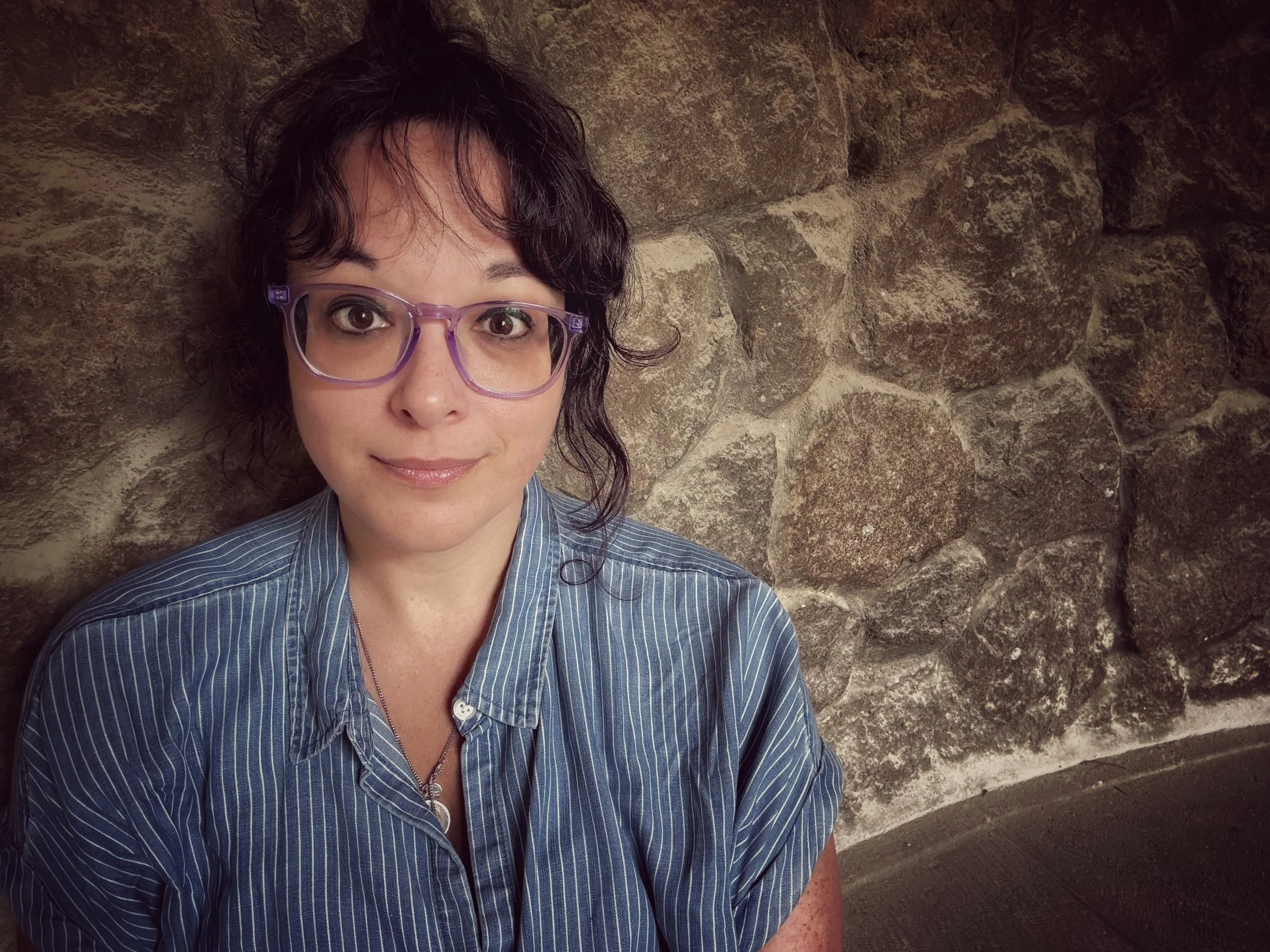
Chelsea Sutton is the writer of over twenty plays and performances including The Abundance and Wood Boy Dog Fish, which was nominated for five Ovation Awards and five Stage Raw Awards, as well as the Emmy-nominated interactive event Welcome to the Blumhouse Live. Her short fiction has appeared in publications such as CRAFT Literary, Flash Frog, Uncanny Magazine, among many others. Currently she is a member at Rogue Artists Ensemble and Associate Editor of The Cosmic Background. Chelsea specializes in what she calls “gothic whimsy.”
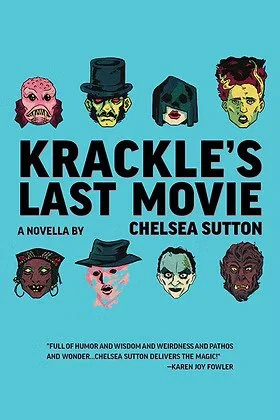
Her debut novella, Krackle’s Last Movie, released February 10, 2026. You can purchase it here
From Editorial Assistant Robin Willett: Krackle’s Last Movie is a supernatural and heartfelt story following the aftermath of the disappearance of underground documentarian Minerva Krackle. Her assistant Harper, by sifting through over thirty years of Krackle’s interview footage with real-life monsters, must piece together the ending of her boss’s final film—and perhaps even solve the mystery of her disappearance. In order to preserve Krackle’s legacy, Harper must face fragments of her own past she hid away long ago. Krackle’s Last Movie is a whimsical, mysterious, and deeply human story woven through time. Its suspense keeps readers on the edges of their seats.
Robin Willett: Krackle’s Last Movie is a story told through a collection of found footage, jumping back and forth through decades of interviews, memories, and video recordings on nearly every page. What challenges did you face in the outlining process, and how were you able to keep track of the larger narrative in this unchronological retelling?
Chelsea Sutton: Part of the challenge was that I didn’t know this was a novella when I started writing it. It began as a short story I wrote for the Tin House workshop, which then grew to be a novelette. Both versions had similar structures, but in a shorter form were easier to keep straight in my head. I then also wrote an origin story for the character of The Great Merlan—so that timeline became integral to Krackle as well. When I realized Krackle needed more room to breathe, I was already committed to this structure so I had to map it out. I sat down and wrote out a complete timeline from the existing manuscript and the origin story and adjusted the linear calendar of events (both personal and national) and the ages of the main characters; the earliest moment in that timeline is from when Minerva Krackle is 16 in 1963 and the latest is in 2019. That master timeline was something I could refer to as I messed with what pieces I presented to the reader first, which was a mix of emotional impact, plot information, and what stage of editing I thought Harper would be at. I was trying to create a sense of following along with Harper in real-time as she edited this film together, following both the actual clips she was reviewing and her own divergent thoughts as she slowly comes to a realization about her role in the film and her own identity crisis.
RW: The main character Harper, an assistant to documentarian Minerva Krackle, is faced with the intimidating task of completing her boss’s movie without knowing her original intent for its ending. As you wrote, was the story’s ending solidified in your mind? How much of the mystery of Krackle’s disappearance was discovered along the way?
CS: I always knew the general outcome of Krackle’s disappearance, and if/when we would see her again, but it wasn’t until I fleshed out the details of The Great Merlan’s origin story and started to weave that together with the novella that I knew more details about what exactly happened during the mummy interview and what the ending of both the film and the novella itself needed to be. This is also connected to my deeper exploration of Harper, our narrator; as her journey became clearer, so did the actual ending of the novella and Harper’s role in it. So while I had the bigger plot points sketched out from the get-go, it was the character work that helped shape what the details really needed to be.
RW: Krackle’s Last Movie blends our modern world with the excitement of supernatural creatures and beasts. According to the lore of the Krackle Universe, this “beastification” began in the early 1970s, and later came to a head in the 1990s when individuals with Curious Monster Syndrome (CMS) were forced to go “underground.” I was curious if there were any real-world inspirations for this aspect of the narrative, whether it be in terms of the timeline or CMS itself?
CS: Years ago, I gave myself a writing project—I was going to write a series of stories that explored the idea of what a “monster” is; I wanted to invert what we thought was a monster or monstrous, with the underlying thought being that humans tend to be more monstrous than anything we may typically define as a “monster.” I don’t think I’m particularly unique in this thought, but it helped guide the stories I wrote and led me to Krackle.
So it’s no mistake that the real monsters in Krackle are people who don’t have scales or vampire teeth or claws or whatever—they have talk shows and guns.
There are many communities during the 1970-1990s and beyond who have had to mask to survive, and still many others who physically can’t. For Krackle, I was exploring this idea more literally by forcing an uneven physical change that would spur the kind of panic we’ve seen numerous times in this country:mob-mentality that has caused disappearances, murders, assaults, and basic stripping of human rights and dignity.
So I was not trying to make a one-to-one analogy to any particular historical moment. But could I point to the Satanic Panic as an inspiration? Post-Civil Rights backlash? ICE raids? Attacks on queer and trans communities? Feminist movements? Reagan-era anything? Post-911 paranoia? Sure. Unfortunately, it’s not a short list of inspirations.
RW: I found Harper’s journey of self-acceptance my favorite aspect of the novella. The scenes where she struggles with her own identity resonated with me long after I set it down. What was your thought process as you developed Harper’s character and her arc?
CS: I’m so glad those scenes resonated with you. They were my favorite (meaning…most emotional) moments for me to write. When I first wrote the short story, I didn’t know Harper’s secret; sometimes characters keep things from you, and Harper is a pretty secretive character anyway for her own survival. Early on I just thought she was this hapless assistant, but when I got to the end of the story I realized why this project meant so much to her, what she was hiding, and why she even had a hard time tapping into her identity. Her struggle with the film then needed to become a physical struggle for her; she has a secret that can only be kept through a painful and never-ending sacrifice. Anytime we deny who we are, that is not just one choice you make and never think about again, it is a choice you have to make day in and day out. Harper’s choice is tied directly to her real, tangible goal of finishing her mentor’s film. It’s the real obstacle to overcome more than the act of editing a movie. Most of my editing in the last few months of the process was focused on Harper’s arc and shaping how each scene was reflecting her journey in addition to moving the plot forward.
RW: You already have two short stories that follow the Krackle Universe: “The Great Merland Dies in Agony Live on Stage!” and “The Belly and the Trees.” Are you interested in writing more in the universe after the publication of Krackle’s Last Movie?
CS: I have a story I’ve tried to write a few times about the line cook working in the diner where many scenes take place in Krackle, so I think there are some stories that could easily spring from the diner setting. I think I’ve also always been curious about the other “Great Merlans” that have existed before the one we get to know in the novella—it’s a title that is passed down, like the Great Pirate Roberts, rather than it being always the same person. There are also many stories that could come out of that first moment when monsters appeared. So, maybe!
RW: What is it about the supernatural as a subject matter that appeals to you?
CS: Most of my work ends up being weird and told through a magical realism lens. The intensity of the magic changes from story to story and Krackle is one of my most tangibly-genre projects with a cast of literal monsters running around. But I think magical realism, slipstream, horror, and everything in between is able to approach a lot of different subjects and human dynamics head-on in ways that are often harder to do in realism—or at least different. In realism, you run into direct biases almost immediately; in a supernatural story, I can talk to you about these werewolves and get you to care about someone different from you by finding parallels and connections to empathy without you even realizing it. Realism and genre are doing the same stuff, just approaching it from different angles. Also, it’s just fun to write about ghosts and vampires and girls with wings and the transient way our bodies experience this life. It’s just a different way to translate the human experience. It’s how I see the world.
RW: What writing advice would you give to any beginning writers eager to get their work out into the world?
CS: This craft is something you work at over a long period of time, and there’s really no other way to do it than to write and share it. Find your peers, people you trust to give you feedback. Submit stuff. Don’t wait for people to give you permission for anything. I like to tell people that I’m NO ONE’s first choice; I’ve built my measly career off of other people turning down opportunities and I was ready to step in. I’ve been the runner-up or on waitlists most of my life—but because I keep working on my craft and not waiting for people to give me permission to do so, that means I can answer the call when they ultimately turn to the reject list where I’ve been hanging out quietly writing about ghosts and stuff.