HFR Creation Stories: An Interview with Alberto Ríos
Alberto Ríos, Arizona’s inaugural poet laureate and a recent chancellor of the Academy of American Poets, is the author of twelve collections of poetry, most recently, Not Go Away Is My Name, preceded by A Small Story about the Sky, The Dangerous Shirt, and The Theater of Night, which received the PEN/Beyond Margins Award. Published in the New Yorker, Paris Review, Ploughshares, and other journals, he has also written three short story collections and a memoir, Capirotada, about growing up on the Mexican border, and most recently a novel, A Good Map of All Things. Ríos is also the recent host of the PBS programs Art in the 48 and Books & Co., for which he won a 2020 Rocky Mountain Emmy Award. University Professor of Letters, Regents’ Professor, Virginia G. Piper Chair in Creative Writing, and the Katharine C. Turner Chair in English, Ríos has taught at Arizona State University since 1982. In 2017, he was named director of the Virginia G. Piper Center for Creative Writing.
This interview was conducted in person between Zhongxing Zeng, a former HFR editorial intern, and Alberto Ríos, one of the journal’s first faculty advisors. The transcription of this interview has been edited and condensed for clarity.
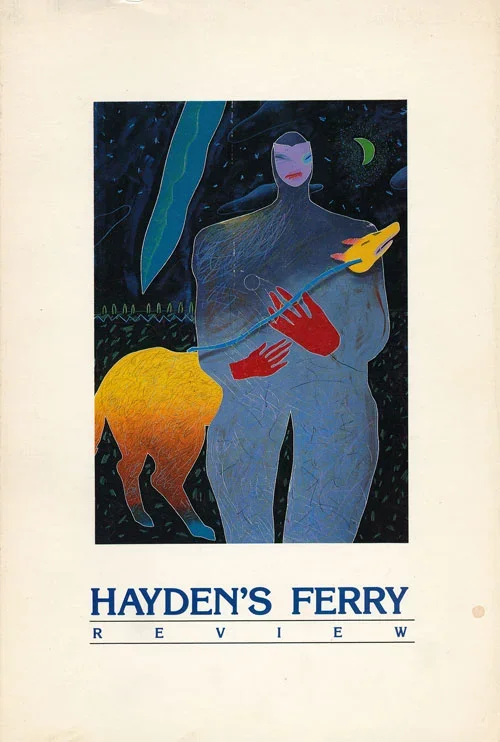
The front cover of HFR’s premiere issue.
Zhongxing Zeng: From reading the Premier Issue statement in Hayden’s Ferry Review Issue 1, I came to know that a lot of people had helped to bring the literary journal to life. Some of them helped with the funding, some helped with the computer input and proofediting, and some helped with the art design. What events inspired the founding members of HFR to initiate a student-centered and student-operated literary magazine in the English department at ASU in the 1980s?
Alberto Ríos: There were a number of things going on at the time in terms of the Creative Writing program at ASU. The MFA program began about the same time.
ZZ: In 1985?
AR: Yeah, about 1985. And before that, there had just simply been a MA in Creative Writing. So the MFA, which is an appropriate terminal degree for writers in academia, was founded around the same time. That meant there was a lot of enthusiasm, a lot of people paying attention, and a lot of desire on the part of students to not just get the degree but to do something with it, and to bloom, to blossom, and step in beyond the page and beyond the classroom into something else. Things like community work—they hadn’t really started yet. Community outreach did not at the time seem appropriate to the university and to whatever. That was crazy, of course. But, at the time, it didn’t seem like it.
A journal was something people had been talking about for a little while. What else can we do? We’re getting a degree. We’re in a classroom. We’re writing things. We’re excited about what we’re writing. How can we help others? How can we help ourselves? And the answer at the time was a journal. This was not an easy decision in that creating a journal from nothing—there was no model here for it. There were models through other journals. But there was no model here. So the details of getting a journal to work were huge. There was nothing small—where you get the money, for example, and how you’re going to solicit the writers. This was, basically, pre-Internet. And we have to remember that. So how do you get people to submit to your journal? How do you tell people that it’s happening? We just did the work of finding help one step at a time.
ZZ: How did people contact one another at that time?
AR: Mail and phone. In those days, it was all done in the old-fashioned way. You just wrote letters. That’s what we did. And that’s how people submitted their work. It was all done that way. It was a much slower pace. It was a lot of paper, keeping track of it all and all that sort of stuff. One of my first ideas was, I thought that, whenever people submitted things and we accepted it, we should fold that up and put it in as a surprise to somebody who was going to be subscribing to the journal, so they would get an original piece of writing. And we were thinking about doing that. And that’s about when the Internet started, and people were submitting online. There was no paper with their signature on it.
ZZ: Like a manuscript?
AR: Yes, exactly. And I thought we should just keep that manuscript. We should keep those artifacts meaningfully distributed, and we’re just going to put them in a file. People can throw them away if they want to, but I think they would keep them. And we had all sorts of ideas early on. Our model, the idea of a journal, was pretty straightforward. It was just—let’s find some great writers, and let’s publish them, and let’s take care of their work. There was no technology to help you print them. You had to set it all. You had to send it to a company that would fix it all up and all sorts of stuff. So it was a complicated and fairly expensive process. We went into debt. The student publications were carrying us. We were not making money. We weren’t exactly trying to, but we wanted to at least break even. But it was so meaningful. It started to grow from that. Even though it may not have been making money, it was making a community. It was making a mark in the greater artistic world. And it was making sense to the students who were writing and wanted to do something with their writing, beyond writing, writing themselves getting published, but also editing, also figuring out things like copyediting and proofreading, and it started to expand the notion of what a student of writing might be interested in.
ZZ: Why was the journal named Hayden’s Ferry Review?
AR: We wanted to be true to where we were and leverage our place. And the first name of Tempe was Hayden’s Ferry. We wanted to say where we are. It was an original kind of land acknowledgment. We didn’t look back far enough. We weren’t acknowledging indigenous land use or proprietors after that, Mexican San Pablo, for example, which is right here. We named it “Hayden’s Ferry,” but we probably should have dug deeper at the time. We were trying to simply say this is the place. It may not be what you are used to—Tempe. There’s something deeper. And that’s what we were trying to go after.
ZZ: The word “ferry” is beautiful and connotes a kind of liminal space.
AR: Absolutely. What I love about it, too, is that in the desert, to have a title with water, inherently implied, was beautiful, because that’s really why people came here first. You don’t see it anymore. We have the Salt River there, the Rio Salado. But it used to be a full-running river. And that’s why people settled here. But it all went underground. It got hot, and people used it for agriculture. So it soon stopped visibly running. And to think about this being named after a river and it had a little bit of magic attached to it. Where is the water? It’s there. You can’t see it. You just have to have faith in it. And the idea that this would carry you across it was just a wonderful idea. And once upon a time, you had to have a ferry when there was enough water and somebody had to take your horses across the river.
ZZ: What were some of the standout and challenging moments back then?
AR: Some of the difficulties in the first years were that we were running through student publications. So we had to in some ways adhere to the same things The State Press adhered to. For example, there were different style sheets in different areas. In journalism, you work with the AP (or Associated Press) style sheet. A style sheet is sort of the rules for punctuation, grammar, and different things. In English and Creative Writing, we were working with MLA (or Modern Languages Association) or the Chicago Manual of Style. So right from the beginning, even how you put a poem on the page was a little bit tricky because we had to talk this through with The State Press and the editors there at the time and say, we’re going to put a comma there, and you’re not going to, but this is different. That was a very interesting philosophical discussion. We just approached the page differently. And that was the beginning of, not of a separation, just the beginning of an understanding that, first of all, people didn’t know there were different style guides. So it was an education for everybody.
Other things came into play as well. In the mid-80s, we probably had more concerns about obscenity, for example, language vocabulary, what you could say on the page and print, and who was going to see this. And in those first ten years, every once in a while, one of the university administrative offices would send the journal back and say, are you sure about this? And we’d say, yeah, we stand by it. There was never any big deal. Nobody ever tried to censor the journal to the credit of the university. Nobody tried to overwrite editors’ decisions. But we did also need to educate the editors and say, you really do have an audience out there. And they’re not all going to think the way you think. So you might freely use this word or that word. But think twice. Is that what you would use if you go home to your family? That just helped us understand that we had to think about our readership as well as our authorship. And there should be a way to bring those together. Whenever there was an issue, we just simply left whatever the author wanted to say.
ZZ: I found that the first issue of HFR contains fiction, poetry, and interview pieces, and the second issue starts to include more genres like visual art and translation. The fourth issue starts to include essays. What pushed these genre extensions to happen at those times?
AR: When we printed the first journal, we were thinking that we were working with writers. Well, what is writing? What does that mean as the meaning varies from one person to another to do it artfully, to do it with intention, and to do it with sensibility? So what I must say now, and it’s partly because of all of these things that we went through, I often say—say it, and I will understand it; say it well, and I will feel it. And that’s the humanities. That’s the arts. It’s not just communication. We can go to a dictionary for that. A dictionary has all of the words in the world, but a poem has only a few. So a dictionary is efficient, and a poem is effective. And that’s the arts. Those words are good, and you use them for a lot of reasons. But the arts do something different. They create feeling along with meaning. I think what we started to see almost right away—and I have to say I was a big advocate of this—is that we spread out what we think of writing: an artful conveyance of meaning. And that included certainly translations
As you can see, we’ve followed up on that now with the Thousand Languages Project. That comes out of those first discussions that we were having. Well, we said it. Can we say it again? Is there another way to say it? Can we say it without impinging on the artist? If it’s an important message, is that where we’re going to stop? So translations and then essays talking about it just came right in. It was natural. And going out looking for books in which the editors were interested in and wanted to say something about, or they saw these things happening, it all started to seem very natural and organic to the journal.
Art was an interesting addition in that we started to see that the first letters of the alphabet were all art. The letter “A” was originally in “ox,” and the letter “B,” beth, was “house.” So we’ve always been drawing. It’s always been art that tries to render something intentionally and humanly to someone else. You’re trying to give them something that they can see, as well as hear, as well as feel. You’re trying to cover all of the bases.
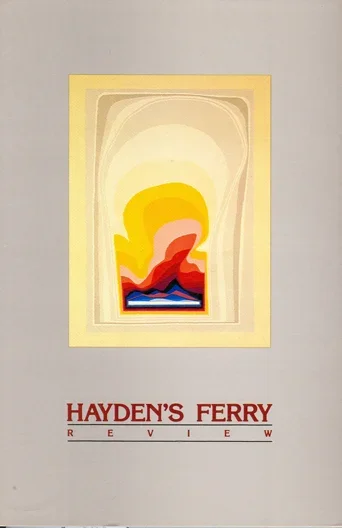
The front cover of HFR’s second issue.
That started to take in art, along with essays, poetry, fiction, and translation. And I’m sure we probably have done a few other things beyond that. The idea that we just write a poem or a story wasn’t enough. There were more ways to tell a story. If we could have included music in it, we would have done it. If we could have included theater, we probably would have done it. Sometimes, it was just simply space considerations. A play would have taken half the journal. And music, we kind of missed the base a little bit in that I think that could have been a part of it. And it’s never too late. So I think it’s natural for us to branch out. But it’s important for somebody else to know that we did think we were branching out. This was all part of the same thing.
ZZ: The inclusion of a music section is really exciting.
AR: We think of not only music but also the human cadence in voice. How we speak has a musicality to it. It isn’t maybe elevated to playable music, but is clearly musical. And that’s something we’ve been talking about and exploring. We’re working now with projects. We’re kind of folding back on what we were doing in that. One of the ideas I have for the Thousand Languages project is translating art. We translate language, but can we translate art? That has been, to me, a very interesting proposition. I also think we forget humor. And we need some, not comics, but something that is humor. We take ourselves so seriously, and we forget to laugh. I think that’s a big part of how you get through being an artist, the life of an artist. You’d better be able to laugh.
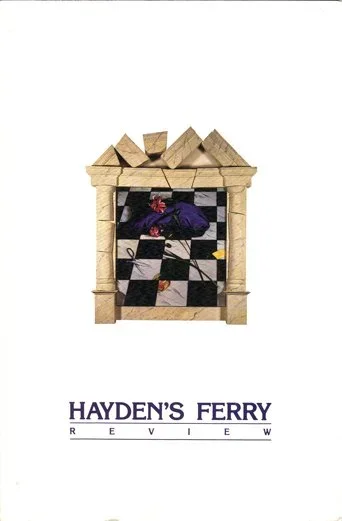
HFR’s third print issue.
ZZ: What was happening politically and socially at the time? And how did that affect the submissions?
AR: One of the things we forget was the change of century, which was a big deal. That was coming. You start to talk about that. Five years, ten years before it happened, some of that fin de siècle discourse was going on. But mostly it was a more gentle politics. You agreed and disagreed with people, but it was much more mannered and reasonable. Personally, my son was born in 1985. So I was watching my son growing up along with watching the journal growing up, and I have to say that was just humanly connective. Right? How do you connect yourself to a journal? It was growing, and I saw my son learning language, learning behaviors, learning how to be better, learning what not to do and what to do. That was the journal, too.
So I saw it as a kind of a child growing up learning how to do things. So whatever was happening politically in the world, all the big issues, let me say, DEI, or the environment, or the geopolitical situations, or war in general, weren't quite there yet. They weren't quite for Hayden's Ferry Review. They were publishing poems, but those weren't really the big concerns yet. It was trying to grapple with how to write a good poem? What can I write a poem about a daisy? And it was still a kind of “Age of Innocence” in those early years. I think they were very important to the formative process of Hayden’s Ferry Review, so that later it could learn to handle bigger issues, experimentations, changes, and to entertain the complexities of the world. I don't think it was that in the beginning, but it started to learn how to do that. We think we might start with that. But that's a dangerous way to start. It's sort of like that thing I was saying—it's all shouting. You have to learn how to sort out really good writing from just “impact” kinds of things, which takes some time. You've got to work with that, and as a journal, it just starts getting smarter and smarter. You start getting reactions to what you're doing. And you start to get better. I think that's what we were experiencing. So the politics and the big issues were there, but they weren't yet forging or forming the sensibility of Hayden’s Ferry Review. That came after the turn of the century and probably with the beginnings of the Internet, computers, and all that sort of stuff.
When I first came to ASU before that, my faculty package, when I first came here, was an office, which was great, a desk, which was ancient, a rotary dial phone, also ancient, a garbage can, and a typewriter. That was it. There was no computer, no internet, no anything. That's how it was. And that’s how I think of the beginning of Hayden's Ferry Review, which went from that into the new technology age. So it has had growth, and it's been part of witnessing history in its technology, its words, and everything else. I think it is admirable. And it's great that it's still on its feet, and that it didn't get taken down by disruption and change. And I think so many journals did. They just fell to the side.
ZZ: Contemplating the past and the present, where do you see the future of Hayden’s Ferry Review?
AR: I see the future as absolutely something I can't imagine. And I'm glad of it. I mean, that is to say, my limitations and the generation I come from shouldn't place limitations on the future. So I'm excited to see what that's going to be.
This is sort of like the point that Dadaists were trying to make at the turn of last century. Tristan Tzara and so on. They would just have absurd concerts, and they would throw trash at the audience. And they would do basically what they were saying, and this was a very important point that we need to revisit. They were saying art is a reflection of the world. World War One was happening. The invention of gases poisoned people. There was still no anesthesia. The world had gone crazy. So should art. If art is a reflection of life, art should go crazy. It shouldn't make sense. It should kill people. Right? They were making a point. And what they were also saying was nihilistic. They would destroy a lot of their art at the end of the evening. They would just destroy it. Later, we saw that in the 70s, with bands like The Who, who would play a concert, and then at the end, smashed the guitar. And whether they knew it or not, what they were saying is this guitar will never play a session as good as we did tonight. And we're trying to keep it. That's it. The Dadaists were saying that if we help to forge the future, something's wrong. We're carrying the virus of whatever led us to World War One. We're carrying it with us. You should start fresh. You should laugh at us. Don't look at us as role models. And I think that was a huge statement. And I think we're still close to the invention of the Internet. We're absolutely in the middle of AI coming on now. The future is going to be a disruption of whatever we've been doing before now. It won't be a cessation of it. We will still keep living. We'll still keep eating lunch. But things are simply going to change. And right now, I mean, there are visionaries a dime a dozen everywhere saying what the world is going to be. That doesn't mean it's true. And it doesn't mean it's not true. They are all possibilities. And that's what the arts are all about. We should embrace that.
ZZ: Is there something that jumped into your mind that we haven’t talked about?
AR: Yeah, I have watched Hayden’s Ferry Review up close and from afar as one of the founders and the faculty advisor, and I've stepped away from it multiple times to give other people a chance to do that. I've kind of quietly supported it with different money and different things through the years, and I feel really proud that I've helped to sustain something that I think has been meaningful to the writer community, both to my students and the students who've come through the program, and also to the people who've been published. That has been something that I could do and be part of, and I didn't step away from that. It was continuing to stay true to it through all its ups and downs. You know, you don't just stop because it seems like you've reached the end. There is no end if you decide.
Yeah. I hope that's what you were looking for.
Zhongxing Zeng is a Lecturer in the Department of English at Sam Houston State University. He holds a PhD in English Literature from Arizona State University. His research interests include English Romanticism, melopoetics, and English–Chinese translation theory and practice. He is also a singer-songwriter who publishes his music under the artist name 曾寅.