3 Questions with Eric Abalajon
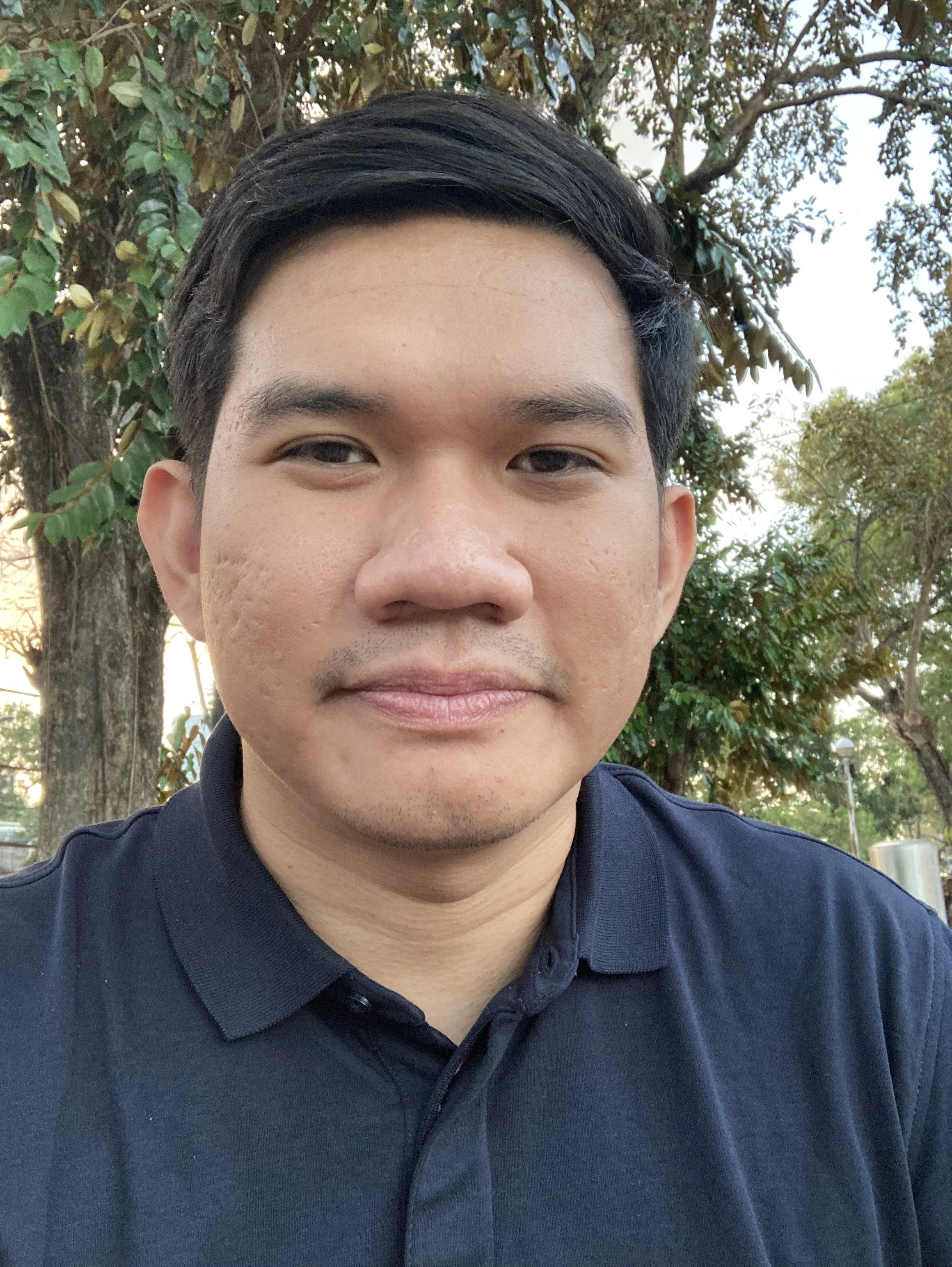
ERIC ABALAJON’s translations have appeared in Circumference Magazine, The Polyglot, Exchanges: Journal of Literary Translation, and Tripwire: a journal of poetics. His first book is the bilingual edition of sa ibang katawan / a different body (2025) by Lean Borlongan. He was also shortlisted for the Poetry in Translation Prize for his translation of “Just Land” by Jaku Mata. He lives near Iloilo City.
Translations Editor Max Wheeler talks with Eric Abalajon about his work in Issue 78
What drew you to the art of translation, and to Jhio Jan Navarro in particular?
I would say a combination of personal ties and a result of navigating academic and literary terrain. The Philippines, like many postcolonial nations, is massively multilingual with around at least 180 languages. Jhio and I live in Western Visayas, growing up proficient in variations of Hiligaynon and Kinaray-a, but later entered an education system that has English primarily as the medium of instruction, and to a lesser degree, Filipino, the lingua franca largely based on Tagalog.We both went to the same university and were part of the college paper under the guidance of an adviser who wrote in all languages I just mentioned and strived for our literary folio to be as linguistically diverse as possible, even if most places would settle in the pieces conventionally in English and in Filipino. Practically, I was already in my teens, raised in Anglo-American reading materials, when I encountered folks who advocate for works in Hiligaynon and Kinaray-a. At first I treated translation as a compromise, an exercise even, to slowly get into my own mother tongue. After I graduated, I remained in touch with my professor and with the paper, and that’s where I first read Jhio’s works, poetry so deeply rooted in place which in turn make for a distinct voice and images. When I seriously looked for avenues, mostly online literary journals to published translations around 2020, the start of the lockdown years, it just made sense to try my hand at translating Jhio’s poems.
You translate Navarro's work from both Filipino and Hiligaynon. Could you speak to the differences for you in translating from each language? As you see it, are there reasons Navarro uses one rather than the other for a given poem, and how does his choice influence your decisions as a translator?
Filipino and Hiligaynon, like most ‘national’ and ‘regional’ languages, have intertwined, sometimes conflicting histories and usage. We haven’t really discussed this in depth, but when Jhio writes in Filipino he tends to cover more ‘national’ themes and subjects, but when he writes in Hiligaynon, it is distinctly close to home, scenes in his home province of Negros Occidental. This tendency means I often take a lot of sociological and anthropological considerations in translation decisions for pieces in Hiligaynon, in order to capture rural life. I have to be very careful since the depictions of the countryside can easily slip into pastoralism, especially if translated into English. I do this slightly less when I work with his poems in Filipino, which tend to be more philosophical rather than documentary, but they are of course, I feel, inseparable in his poetics.
A lot of the imagery in these poems is deeply rooted in place, and particularly in the natural world and sites of agricultural labor. What challenges and opportunities does that rootedness present to you as a translator? How do you navigate the balance of preserving his specific imagery and references with creating a translated poem that is legible to a reader from elsewhere?
Circling back to my early years as a translator, I was fortunate to work with Khairani Barokka who formerly edited Modern Poetry in Translation. I only read and spent time with her work a bit later, but she is an Anglophone author, with Indonesian background, and deeply interested in colonial legacies such as plantation agriculture. Working with her pushed me to confront the fact that it doesn’t mean I translate into English, I am strictly translating to a white audience that also tends to belong to an urban and middle class demographic, in affluent countries. Her engagement and enthusiasm with our work really gave me the confidence to embrace that I am writing to a very diverse readers, living in various conditions in the world. I do not have to ‘polish’ or ‘universalize’ local experiences because English, or englishes, is continually evolving and being reclaimed for various purposes. And translation is a vital way to participate in these conversations.