3 Questions with Dan Marcantuono
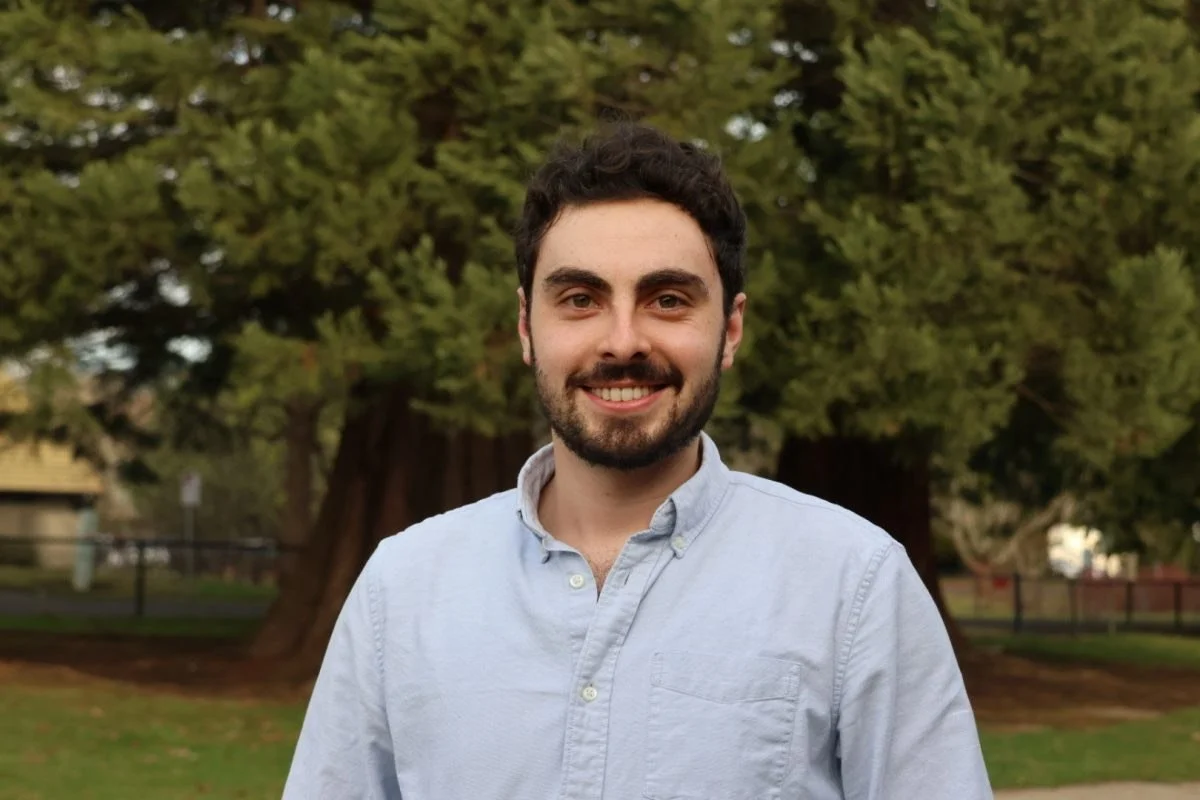
DAN MARCANTUONO is a writer and teacher based in Portland, Oregon. His fiction has appeared in Palaver Arts Magazine and won the 2020 Edward W. Moses Creative Writing Competition. He earned his MFA in creative writing from Bowling Green State University.
Associate Editor Tsong Chang talks with Dan Marcantuono about his work in Issue 78.
What struck me first in “See Yard” is the feral moment of the yard “as a collective enterprise…learning wildness.” Can you talk about your journey with nature writing, or what kinds of awareness are reflected in the yard’s surge and the parents’ purge?
I haven't done much intentional nature writing beyond this story, though I'd like to. While I was working on this, I was engaged in questions about what people perceive nature to be for in human contexts, particularly suburban ones. The expectations placed on a tree by organisms who share in its ecosystem are vastly different than people who live in the tree's neighborhood. I find this disconnect, the ways we use nature to create social meaning, and the normalization of it all, completely absurd. The tension between surge and purge is a product of this disconnect.
Having grown up in a nuclear family, I find myself inevitably relating to Tim. How do you understand childhood in relation to the wilderness? Are there any particular inspirations?
Most kids haven't been socialized to see yards, or even property, as possessing social capital yet, which makes their perspective on nature more compelling to me than an adult's. I love how imaginative and playful kids can be in nature, just for themselves, even when they're anthropomorphizing it like Tim. It's wonderful that a backyard can mean so many different things to so many different kids. Regarding inspiration; this story came from a fond memory I have of my dad lifting me into a yard debris bin so I could jump and make more space, just like Tim does in the story (though the parents in the story are not at all reflective of mine).
Is there anything you would like to share about your story “See Yard” that we do not know?
This story is obviously concerned with Tim's perspective and his parents' perspective, but in the process of writing it I was consumed by the question of how to represent the "perspective" of the yard without projecting a human consciousness onto it. Largely, I failed in this effort. The closest I felt that I got to the viewpoint of the yard was in the scene that focuses on what's happening in the yard debris bin in the dark with no people present, but even that scene relies on human abstractions. Ultimately, I saw the endeavor of capturing the yard's perspective and my failure to do so as interesting in its own right, and imitative of some of the ideas present in the story.