Siobhan Jean-Charles Interviews Mckendy Fils-Aimé
MCKENDY FILS-AIMÉ is a New England based Haitian-American poet, organizer, and teaching artist. He has received fellowships from Callaloo, Cave Canem, The Watering Hole, and Periplus. Over the span of nearly two decades, Mckendy has represented New England in several regional and national poetry slams, performing on numerous semi-final and final stages. Mckendy’s work has been featured or is forthcoming in Best New Poets, The Adroit Journal, Muzzle, American Literary Review, the Academy of American Poets’ Poem-a-Day series, and elsewhere. His debut poetry collection, sipèstisyon, will be published by YesYes Books in 2026.
From Poetry Editor, Siobhan Jean-Charles: sipèstisyon is a debut collection that explores memory, grief, faith, the violence of New England, and resilience. Mckendy Fils-Aimé utilizes Haitian superstitions as a lens to engage with isolation, death, language, and a fractured relationship with a father. His language is that of a storyteller, using frank diction, stable syntax, and tender invocation of loved ones. Throughout the collection, Fils-Aimé’s poems archive memory, while questioning the shifting state of recollection that occurs with each retrieval. sipèstisyon is an ode to folk tales and proverbs and interrogates how stories are told to both soothe and wound. The poems in this collection are precise, vulnerable, honest, necessary, and subversive.
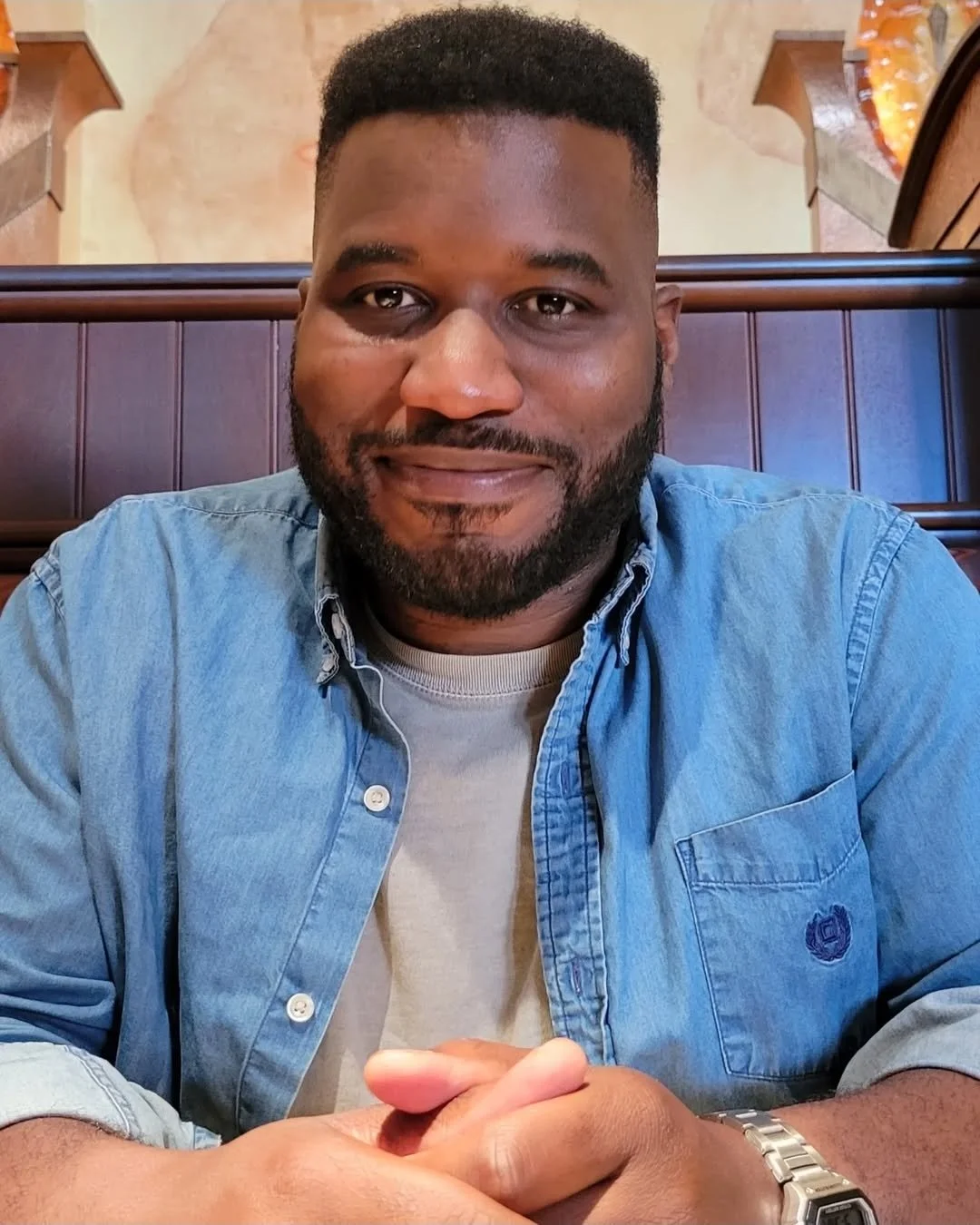
Your collection explores Haitian superstitions and poems throughout the collection are accompanied by epigraphs such as “If a blackbird enters your home, you must kill it or someone close to you will die.” Could you describe your first encounters with Caribbean superstitions?
What’s interesting is that I can’t imagine a life without superstitions. They’re so integral to my upbringing. From a young age, I remember the adults in my life stating superstitions as if they were immutable truths, as certain as sunrise. Because I would hear them when visiting relatives in Haiti when I was a kid, and also back home in New York, superstitions felt like laws without jurisdiction. They were woven into the first lessons I learned about understanding and staying safe in the world. As I grew older, I became more and more skeptical, but I still appreciate having superstitions in my life. They might be rooted in fear, but I think passing them down is an act of love, especially for people from marginalized communities. To tell your child, “I have little to offer you in terms of finance or upward mobility, but I want you to have this language, this light, to stave off the world’s chaos and woe” is beautiful.
In “on superstitions” you write: "i was raised reading a bible /of conditional statements / & sometimes the good book.” When this poem was published in Poets.org, you described this poem as an exploration of “a multitude of belief systems in someone’s spiritual journey.” Can you speak more about the contradictory nature of faith, and how its intersection with religion(s) has influenced your work?
The Catholic church had a strong presence in my childhood. I was baptized, received my first communion, and went to church with my family most Sundays. Praying before bed and meals and discussing scripture were common practices at home, but the influence of Vodou was never far away. When I asked them, my elders never admitted to believing in Vodou and sometimes disparaged it, but they wouldn’t hesitate to hire a mambo if a relative got really sick. It was also normal for them to blame malevolent forces like lougawous for someone’s misfortune. And like so many Caribbean kids, when my mother told me she had a dream, I knew it wasn’t a laughing matter.
Although I didn’t have the language for it at the time, these experiences taught me about duality. If the adults were engaging in Vodou and Catholicism, then both religions held importance. I don’t consider myself a practitioner of either faith, but I wouldn’t call myself a skeptic. There are too many unknowns in the world for science to be the answer to everything. Like a lot of new poets, I often referenced Greek mythology in my early work, but tapping into Catholicism and Vodou felt truer to me. That’s not to say I’ll never write about other religions. I write about what interests me, but engaging with Vodou and Catholicism feels the most natural way to write the stories I’m trying to tell. It connects me to culture and is so necessary for this archival work.
The poems in sipèstisyon are often set in New Hampshire and Massachusetts, where you’ve been performing in the slam poetry scene for almost two decades. How has New England shaped your writing process and poetry?
New England is where I discovered my love of poetry. I was always a creative, but if I hadn’t moved there when I was young, I don’t know if I would’ve become a poet. I wrote my first poems in high school after reading Edgar Allen Poe in English class. A few years later, I stumbled across Slam Free or Die, a poetry slam and open mic in Manchester, NH. At Slam Free or Die, I learned that my voice mattered. It was where I started writing about my childhood and the racial trauma I experienced growing up in New Hampshire. Whenever I shared my work, the audience was always so supportive and encouraging. It was something that I really needed at the time.
Eventually, I started attending shows in Massachusetts, like the Boston Poetry Slam, the Poet’s Asylum, and the Lizard Lounge. In those spaces, I learned so much about not only performance but storytelling. I also discovered how poetry can live on the page. If it wasn’t for my friends and mentors from poetry slam, I would have never known about books like Blood Dazzler, Pink Elephant, Dancing In Odessa, Kingdom Animalia, Brutal Imagination, and Lighthead, to name a few. It might’ve been years before I discovered Audre Lorde, Gwendolyn Brooks, or Yusef Komunyakaa. I owe the narrative elements of my work and the appreciation of form to my time in the New England poetry slam scene.
Haitian Kreyól is used sparsely throughout the collection, but its title is a Kreyól word. Could you elaborate on your choice to select sipèstisyon as a title, and how it serves as a frame for the rest of the book?
Sometimes I joke that the second most challenging part of creating sipèstisyon was writing the poems because coming up with a title was so hard. During its decade of development, the project went by many names, but it wasn’t until 2023 that I started experimenting with sipèstisyon as a title. One of the reasons I picked sipèstisyon is that it shares the name of a series of poems that play a major part in the collection’s narrative. These poems helped lay the foundation of the collection. Another reason was that I wanted to signal to readers that, although the book is written in English, it does not solely concern itself with English-speaking cultures. The superstitions and folklore are Caribbean, and I didn’t want to hide from that. Although the book largely takes place in America, it is a story of immigration and love of ancestry as much as it is about generational trauma.
What are you working on now?
I’m currently working on two poetry projects. The first is a full-length collection about the lougawou, a shapeshifting creature in Haitian folklore. In that project, I use the lougawou as a vehicle to discuss race, identity, and transformation. I want to explore what it means to be human. I’ve been working on the lougawou book for a few years now, and I’m hoping to have a rough draft complete by the end of 2026. The second project is a poetry chapbook using business documents like performance improvement plans and org charts as containers for the poems. It’s been a welcome experiment in getting out of my comfort zone. I’m in the early stages of that project, so who knows when that will be done.